San Francisco’s Homelessness Crisis Collides With Policing After Altercation Involving Mayor’s Security Detail
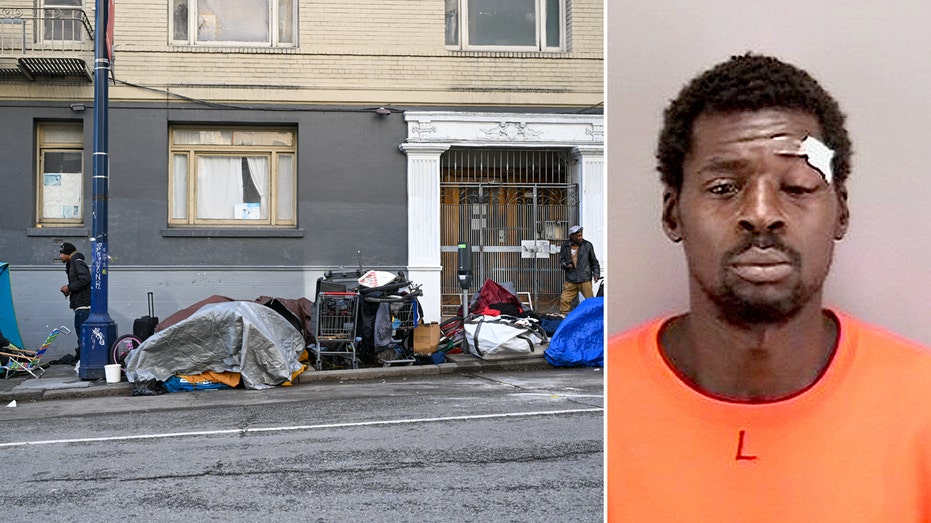
A 44-year-old unhoused man at the center of a physical altercation with a San Francisco police officer assigned to Mayor Daniel Lurie’s security team has been arrested again — just days after a judge ordered his release and suggested he may have been the one subjected to violence.
Tony Phillips was taken back into custody Monday morning after police say he violated a court-ordered stay-away directive. Officers conducting outreach to people living on the streets reportedly identified Phillips and arrested him without incident.
The re-arrest follows a ruling last week by San Francisco Superior Court Judge Sylvia Husing, who ordered Phillips released from jail after reviewing the circumstances surrounding the March 5 confrontation in the Tenderloin — a neighborhood long emblematic of the city’s deepening housing and behavioral health crises.
A Disputed Encounter
According to prosecutors, the clash began when Mayor Lurie and his security detail encountered a group of people in the street. Authorities claim Phillips argued with the mayor, moved toward him, and was physically intercepted by an officer. Prosecutors allege Phillips then tackled the officer, lifted him off the ground, and slammed him onto the pavement, causing a concussion and a head injury.
Phillips now faces felony charges, including resisting an executive officer and assault on a peace officer, along with an enhancement alleging serious bodily injury. Prosecutors have pushed to keep him detained without bail, citing public safety concerns and a record of missed court appearances.
But Phillips’ attorney, Ivan Rodriguez, paints a starkly different picture. He argues that video evidence shows the officer initiated physical contact and that his client was not the aggressor. In court, Judge Husing underscored that view, stating that Phillips appeared to have been “violently assaulted” — a remark that has intensified debate over how policing intersects with poverty and homelessness in the city.
“The judge said it herself: Mr. Phillips was attacked,” Rodriguez said, calling the release order “the first step to justice.”
At prosecutors’ request, however, the judge imposed a stay-away order barring Phillips from returning to the area where the incident took place — a condition authorities now say he violated.
Safety, Power, and Public Space
The episode has reignited larger questions about how cities respond when poverty becomes visible in public spaces — particularly when those spaces intersect with political power.
Mayor Lurie has described the encounter as part of his hands-on approach to governing, saying he stopped because he was concerned about safety. He has repeatedly emphasized that he walks city streets daily, arguing that leadership requires witnessing conditions firsthand.
“You can’t solve what you can’t see,” the mayor said in a recent public statement, reiterating his focus on public safety and addressing homelessness.
Yet for housing advocates and civil rights observers, the case underscores a long-standing tension: unhoused residents are frequently criminalized for existing in public view, while structural solutions lag behind enforcement-heavy responses.
Broader Systemic Issues
Phillips also faces other pending misdemeanor cases related to alleged squatting, loitering, and possession of drug paraphernalia — charges that advocates argue often reflect survival strategies of people with nowhere else to go. He is scheduled to appear in court later this week, with a separate hearing related to the altercation set for April.
Years earlier, Phillips had been arrested in connection with a fatal stabbing, though prosecutors declined to file charges at the time, citing insufficient evidence.
The San Francisco Police Officers Association declined to comment on the judge’s remarks but reiterated its concern for officer safety. Union representatives emphasized the risks officers face in the line of duty and their commitment to protecting elected officials and residents alike.
Meanwhile, Mayor Lurie recently announced that the city secured nearly $100 million in state funding aimed at expanding locked psychiatric beds, treatment capacity, and a sobering center — steps his administration says are designed to move people off the streets and into care.
For many advocates, the central question remains whether increased funding for treatment will be paired with robust investments in affordable housing, voluntary services, and community-based care — or whether enforcement will continue to dominate the city’s response to visible poverty.
As the legal case unfolds, it serves as a stark reminder: in a city grappling with extreme inequality, the line between public safety and the rights of society’s most marginalized residents is often contested — and the stakes are measured in people’s freedom and dignity.